Resources to Help You Flourish
Eclipse | Growth & Reflection
Avenue | Strategy & Visibility
Eclipse | Growth & Reflection

- Coaching focuses on the present and future, identifying goals, obstacles, patterns, and next steps.
- Coaching is not therapy, it doesn’t diagnose or treat mental-health conditions.
- You don’t need to be in crisis to benefit from coaching. It can be useful during transitions, relationship changes, career shifts, personal growth, or when you simply feel stuck.
- A coach doesn’t make decisions for you. Coaching uses conversation, reflection, accountability, and practical strategies to help you clarify what you want.
- Goals can change. Coaching can evolve as your circumstances, priorities, and understanding of yourself change.
- The right coaching relationship should feel collaborative, not like someone telling you how to live your life.
Mosaic | Care & Connection
Avenue | Strategy & Visibility
Eclipse | Growth & Reflection

- Cognitive engagement is about connection, not testing. Familiar conversation, music, games, photos, and everyday activities can encourage participation without making someone feel evaluated.
- Routine can create comfort and predictability. Consistent meals, activities, sleep schedules, and familiar surroundings may make daily life easier to navigate.
- Meet the person where they are. When someone is confused or remembering things differently, correcting every detail isn’t always necessary. Responding to the emotion behind what they’re saying can sometimes be more supportive.
- Independence still matters. Support can focus on what a person can do and provide assistance where needed rather than automatically taking over.
- Meaningful activities are personal. Music, hobbies, household tasks, photographs, conversation, and other familiar interests may be more engaging when they connect to the person’s history and preferences.
- Caregivers need support too. Breaks, realistic expectations, shared responsibilities, and outside support can help caregivers maintain their own well-being while caring for someone else.
Avenue | Strategy & Visibility
Avenue | Strategy & Visibility
Avenue | Strategy & Visibility

- A strong brand is more than a logo. It includes your message, voice, values, visuals, and the experience people associate with you.
- Clarity makes marketing easier. Knowing who you serve, what you offer, and why it matters gives your content and promotions direction.
- Visibility and credibility work together. Being seen matters, but consistent messaging and a clear identity help people understand and trust what they’re seeing.
- You don’t have to be everywhere. Choosing the platforms and opportunities that fit your audience can be more effective than trying to show up on every channel.
- Consistency doesn’t mean repetition. Your message can stay recognizable while your content, campaigns, and creative ideas evolve.
- Strategy should support your goals. Branding, publicity, content, and partnerships work best when they’re connected to what you’re actually trying to accomplish.
Everyday Tools for Flourishing
Everyday Tools for Flourishing
Avenue | Strategy & Visibility
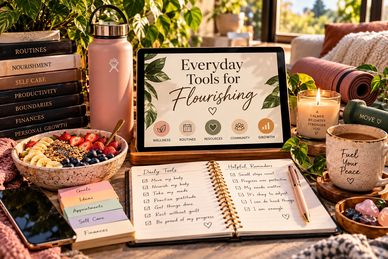
* Start with three priorities. Choose the three things that matter most today instead of trying to tackle everything at once.
* Use the 5-minute rule. When something feels overwhelming, commit to doing it for just five minutes. Starting is often the hardest part.
* Schedule rest like a responsibility. Recovery, sleep, and downtime belong on the schedule too.
* Check your basic needs. Before assuming everything is falling apart, ask: Have I eaten? Had water? Rested? Moved my body? Connected with someone?
* Create one small routine you can repeat. A consistent morning, evening, meal, or planning routine can provide structure when life feels chaotic.
* Do a weekly reset. Review appointments, responsibilities, meals, finances, and personal needs before the week begins.
* Leave room for adjustment. A routine is supposed to support your life, not become another thing you feel guilty about.
The Weekly Reset
Everyday Tools for Flourishing
Connection & Community

* Look ahead. Check your appointments, deadlines, responsibilities, and anything important coming up.
* Choose your priorities. Decide what truly needs your attention this week instead of treating everything as equally urgent.
* Plan the basics. Think through meals, medications, transportation, errands, household needs, and finances.
* Make space for yourself. Put rest, movement, something enjoyable, or quiet time on the calendar too.
* Check your connections. Is there someone you need to call, respond to, check on, or ask for support?
* Clear one source of clutter. Your desk, inbox, car, refrigerator, calendar, pick one. You don’t have to reset your entire life.
* Ask one question: What would make this week feel more manageable?
Connection & Community
Everyday Tools for Flourishing
Connection & Community

• Check in with someone you trust, even a quick text counts.
• Schedule connection instead of waiting until you “have time.”
• Look for local groups, classes, clubs, or volunteer opportunities built around your interests.
• Create small rituals of connection: weekly calls, shared meals, walks, or coffee dates.
• Ask for support when you need it, connection doesn’t require having everything together.
• Remember that community can be chosen: friends, neighbors, coworkers, support groups, faith/spiritual communities, and online spaces can all become part of your circle.